

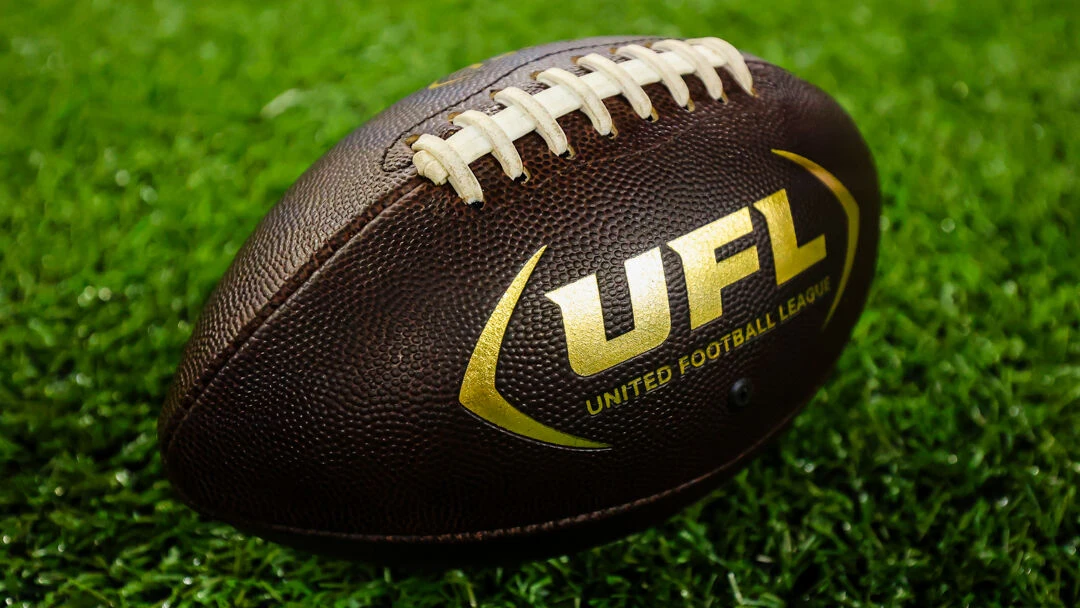

Spring football teams are in for a roster reset. Again.
For the second time in three years, UFL teams will see their players dispersed among the entire league, this time due to the relocation of three franchises and an overhaul of the majority of head coaches, all under the guidance of new owner Mike Repole, who has made sweeping changes in many areas of the UFL.
A document containing the details of the league’s player reshuffling plan was obtained by Luke Miller of State of the Stallions and posted on his social media account. In it, the league provides information on the colleges allocated to each team (another big change courtesy of Repole), the player procurement process and quarterback dispersment rules, among others.
Before analyzing what’s contained in the three-page document, it’s important to note that while the big picture processes are likely solidified, some of the smaller details, such as dates, could be changed and this should by no means be considered a final draft. In spring football, nothing is for sure until it happens.
- Build Player Pool
Here, we get a glimpse at the new-look player personnel department at the league level. Overseen by former NFL general manager Doug Whaley, it appears there will be three-to-four regional scouts and one national scout. The identities of three of the scouts have already been reported. The scouts are “assigned” to evaluate and grade two UFL rosters each. With no team general managers, it would seem they would be in charge of building and maintaining those rosters. In addition, their responsibilities will also be the assessment of select free agent position groups. That’s a lot to put on the plate of a collective so small in numbers.
2. QB Assignments
While roster shakeups were never completely ruled out and territorial assignments were a certainty, it was surprising to see quarterbacks get their own category in terms of how they will be doled out. Perhaps it shouldn’t be: Most spring football leagues, including the AAF and both of the most recent versions of the XFL, had a separate way of assigning the position outside of the normal draft process.
And since teams are basically building from scratch again, the league is taking care to make sure the most valuable position in the game is given the support and attention it deserves. The process appears to be similar to how QBs were assigned prior to the XFL reboot in both 2020 and 2023 (which should be no surprise as Whaley was involved in both of those iterations). The idea that head coaches will have a say in their signal-callers is important.
As in all the pieces of the roster-building puzzle, college allocation will play a role and seem to act as a tiebreaker if multiple coaches put in claims for the same QB. If Jordan Ta’amu returns and his old QB coach and interim head coach in D.C., Shannon Harris, claims him as the Defenders’ number one quarterback and so does A.J. McCarron in Birmingham, does McCarron get him by virtue of Ta’amu playing at Ole Miss, one of Birmingham’s allocated schools, even though that was seven years ago? If so, it will be a tough sell to the Defenders fanbase.
Offensive coordinators will join head coaches and the league in recruiting quarterbacks after the assignments are made. That makes the selection of OC for each team that much more important.
3. College Allocation
Of the list I compiled in a previous article in which I tried to predict the allocated schools for each team, I got 17 out of 21 correct. While my list featured three schools for each team, I speculated that the UFL could choose up to five each. They ended up at four – except Dallas and Birmingham are listed as having five. This could be an example of where this process may still have some kinks to work out before it goes live. I can’t really see a good argument as to why the numbers shouldn’t be equal across the board.
Some of the colleges really stretch the 100-mile radius initially mentioned by Repole when discussing his new vision. A few interesting notes: The University of Michigan falls under Columbus’s allocated schools, despite UM and OSU (located in Columbus) being one of the most prolific and long-standing rivalries in all of college football. Iowa State as an allocated school for St. Louis was a head-scratcher since Ames is nearly 400 miles away. However, Battlehawks coach Anthony Becht’s son Rocco had been the starting QB at Iowa State…until Saturday, when he announced his intent to transfer.
In the above linked column, I wondered how the UFL would handle players that attended multiple colleges, and the document notes it would be based on “league discretion.” Best to have a hard and fast rule for that so as to not give the appearance of impropriety when approving or disapproving allocations. When everything is running out of the league office, there can’t be even a whiff of favoritism or else the house of cards this idea is built on falls in on itself quickly. Fans won’t stand for the league tipping the scales in any direction.
It appears that teams will get to select from the player pool mentioned in note one up to 10 players from their allocated schools on January 9, in a process separate from the draft itself. The right of first refusal is something I mentioned in my column and something the UFL will implement any time an eligible player signs with the league during the off-season or in-season, according to this document.
It’s also noted that head coaches will be selecting players from these schools. As the UFL goes with novice coaches like Ted Ginn Jr. and A.J. McCarron, they’re also going with coaches that don’t have a background in player evaluation. This is the downside of giving up team GMs, arguably, when they’re needed the most. Even with a general manager, you had trust that Skip Holtz knew what to look for in a player when recruiting them; does McCarron?
4. UFL Draft
Some stuff we’ve seen before, some new wrinkles in how the draft will work from previous spring league dispersals. The UFL has decided to do the draft in two segments. The first will occur with players who played in the league last season and who had signed into the league during the off-season prior to Repole’s arrival. The snake style of draft returns, which has been the most common type in spring football.
The position groups are slightly different. Ahead of the 2020 and 2023 XFL seasons, skill position players were all bunched together in their own “phase,” that being tight ends, receivers, and running backs. Here, they’re separated, though backs and tight ends interestingly are lumped together (it would make more sense to have TEs with WRs). This is closer to the USFL draft before the 2022 reboot, though they broke down the position groups even further.
No maximum or minimum is also interesting and slightly different than in the past. It makes sense though as we’ve seen some teams trot out offenses and defenses that don’t utilize a position as much as others, so why force them to draft a set number of players that are going to be of little use to them? The “open” phase is another holdover from previous XFL drafts.
The second segment, scheduled for the following day, will be similar and include many others who may or may not opt to join the league. The most interesting part of this is that 2026 NFL draft eligible players can be selected here, indicating the UFL will not be holding a College Draft as they’ve done in the past. As someone who has tracked UFL Showcase attendees throughout the fall, it will be curious to see if any of them get selected.
One former XFL general manager termed the draft process to build a roster from scratch as akin to “drinking out of a fire hose.” When so many players are eligible to be drafted and there are so few evaluators helping out the teams, it certainly feels like it will be that way once again. There is a risk that talented players may fall through the cracks when building rosters in this fashion.
There’s an addendum that 64 players must be drafted, which will be the number each team will bring to training camp (the same number as in 2025). How each team builds its roster and which segments of the process they lean on the most will be a key storyline to follow. Of course, not all of the 64 drafted players will report to training camp; teams are able to supplement those roster spots with free agents signed after the draft. How that will work, in terms of coaches working with the league office to find and claim talent, is one question unanswered by this document.
Conclusion
It’s going to be an exciting and busy time for both those in the UFL office and fans as teams reorganize and in the span of 10 days, use four different methods to create eight 64-man rosters from scratch. While this produces a lot of intrigue and gives fans and analysts alike a lot to digest and discuss, the hope is this is the last time a process like this will have to occur in spring football.