

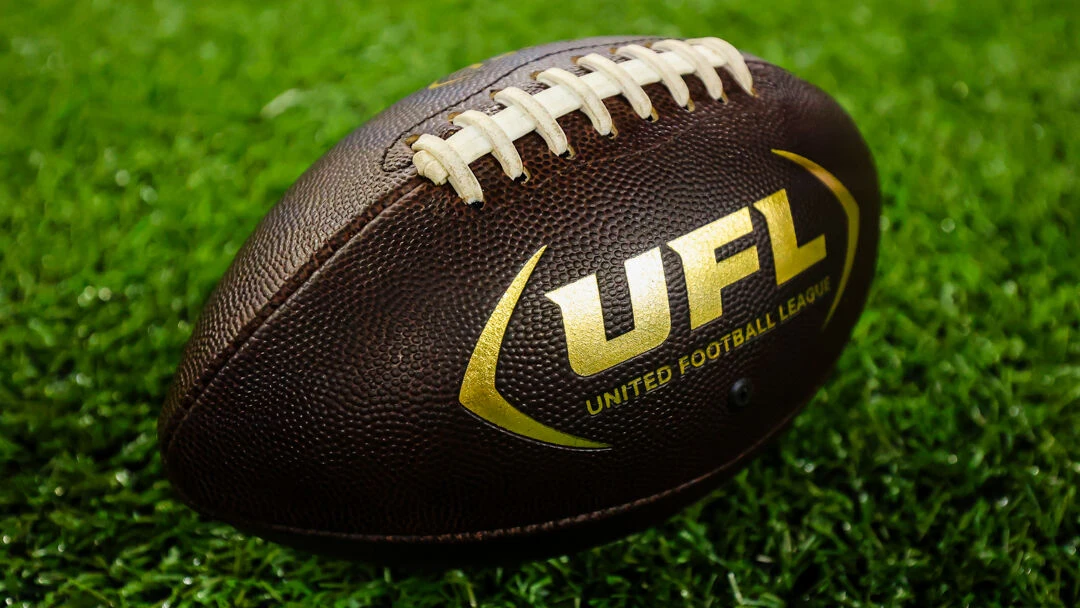

UFL team rosters are now stocked; we await single-game tickets going on sale early next month, as well as the team uniform reveals around the same time. After that, training camp rapidly closes in. With that, I bring you UFL News Hub Mailbag #3, where you ask the questions and I answer them. Stay tuned to social media (@gregmparks on Twitter/X and gregmparks.bsky.social on Bluesky) for your opportunity to participate in the next mailbag column, likely before players report to the Arlington hub and camp officially kicks off.
Some questions may be edited for length and/or clarity.
Cameron Schiller asks, “What are your post draft power rankings?”
I already published my eight-part series taking a look at each team’s position groups acquired during the draft. It’s difficult to give a one-through-eight ranking right now, but I will say, on paper, D.C. has a big advantage. Not only do they return a 2025 MVP candidate in QB Jordan Ta’amu, but they also have continuity elsewhere on their roster and coaching staff in ways that other teams don’t. The other issue is many of these players drafted won’t be on the training camp roster; even as I write this, players are being dropped daily, new ones added. So I’d have D.C. at the top and Louisville at the bottom – I thought their draft stood out as the weakest while most others were all kind of knotted together in terms of quality. In some ways, that’s a good thing and checks the box of “parity” that the league is looking for.
But dear Cameron wrote in with a question, and I shall answer it. My post-draft power rankings, then, are as follows:
- D.C. Defenders – Continuity is huge
- Birmingham Stallions – Reaping the rewards of The House that Skip Built
- Dallas Renegades – The Spring King is back and so are many of his offensive weapons
- St. Louis Battlehawks – Watch for the D – a fierce pass rush and some top corners
- Orlando Storm – Becht has built from the ground-up before with success
- Columbus Aviators – Will benefit from being the team Michigan morphed into
- Houston Gamblers – Big questions at quarterback
- Louisville Kings – See Gamblers
Reputable Lack asks, “Was there a draft pool available of all the eligible players for the public to view? Or is it private, never to be released?”
The draft pool, such as it was, was basically any free agent not under contract with another pro league. So in that way, it’s public if you know who is unsigned. As is my understanding, players did not “opt-in” to a draft pool. That’s why you’re seeing so many players being removed from rosters each day. Those players have chosen to retire, sign with another league, or just bypass the UFL. Some were likely selected by head coaches without knowing if those drafted would even be interested in playing.
XFL 2020 sort of spoiled us with their transparency. They had an opt-in draft pool, where players from XFL Showcases held in 2019, and others, would agree to be a part of the draft-eligible pool. That way, teams knew they were drafting people who’d already agreed to be a part of the league. And those names were made public. We’ve not seen that degree of transparency from any other spring league after that, for reasons heretofore unknown.
@robnrnbrgr1 asks, “How are post-draft free agent signings handled? If a top fringe NFL talent decides to make themselves available, are the school allocations/regions taken into account? Does the league decide the best placement? There aren’t team general managers anymore and it makes me nervous.”
This is one of those questions we haven’t fully gotten an explanation about. I can say for sure that school allocation is taken into account when players become available – if they attended one of those schools subject to allocation, the team they can be allocated to has the right of first refusal. It used to be that GMs and coaches would recruit players and acquire them that way. Head coaches may still do a level of recruiting, but obviously they can’t be expected to know all free agents out there.
That’s where the centralized league scouting comes in. Some coaches may be more hands-on with others in how their teams are built; some may delegate a degree of that to their assistant coaches (i.e. the linebackers coach has to be familiar with the linebacker free agents in case one needs to be added in camp or during the season); and some may just tell the league office, “hey, I need a placekicker,” and Doug Whaley and company assign them one. That’s my impression anyway. For what it’s worth, I’ve had agents and players reach out to me to ask how they can get on UFL radars, so this process apparently hasn’t been clarified to them, either. I’m hoping the UFL makes Whaley available for interview before the season as they did last year because I’d love to get into the weeds with him on how this all works.
It’s understandable to be nervous about this process. Remember two years ago, the uproar when a tight end was blocked from signing with San Antonio prior to the championship game against Birmingham. That had the feel of the league office putting its fingers on the scale. Now, you have all transactions running through that same league office, with little explanation to the public about how this all works and what checks and balances are in place to make sure everything is on the up-and-up.
Ed Helinski asks, “Refresh our memories. Are there age and pro experience limits for players in the UFL?”
As far as we know, the answer is “no.” It’s a valid question, though, as new owner Mike Repole has mentioned a few times in interviews that he doesn’t want the league to be a place for players whose NFL possibilities have dried up. That’s a 180 from previous comments made by league officials, who were happy if players could make a living playing spring football. How seriously Repole meant this and to what lengths he’d go to enforce those ideas remain to be seen. Which leads us into…
Kyle Vick asks, “Really seems like Repole is pushing for age 28 and under for players, gearing more toward being a developmental league. Thoughts on that shift?”
As long as 31-year-old Luis Perez is still kicking in the UFL, I wouldn’t worry too much about any age restrictions. Spring football has always been developmental for the NFL, whether management calls it that or not. The question should be, how does seeing itself as a developmental league change how the UFL operates, if at all? If it really isn’t going to change anything in a substantial way, call it whatever you want. But if age and experience restrictions start to creep in, that could be an issue.
My thought has always been, spring football needs talent. And if a 32-year-old is more talented than a 22-year-old and that 32-year-old wants to play spring football, a team shouldn’t be precluded from signing them. Marquette King is 37 years old – if he still wants to punt and a team wants to sign him, should they not be able to because of his age, even if he’s still better at his age than many of the younger punters?
Realistically, most teams would opt for the younger, fresher body and the potential of that 22-year-old anyway, so I don’t even see what the purpose of putting age restrictions on the league would be. It would affect such a small number of players such as to create more trouble (i.e. bad press) than it’s worth. The fear associated with being a “developmental” league is turning the UFL into a college all-star game atmosphere where the results of the game almost don’t matter as much as the development of the individual. But you’ll never attract a local fanbase that way, so I don’t see that as a real concern at this stage.
1 Comment
by Frank Dux
Most QBs have their best seasons after age 30. If MP wants the league to be full of inexperienced QBs, then the level of play will suffer. He should maybe talk less.