

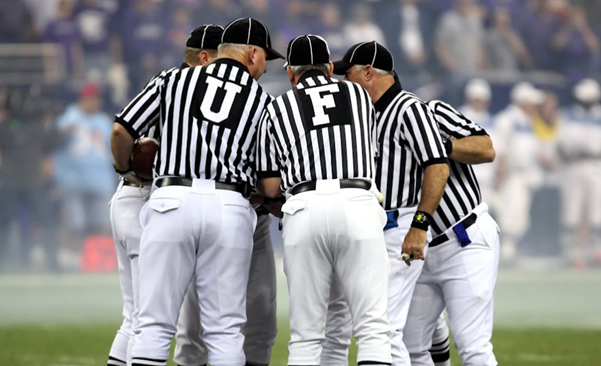

At first glance, the NFL and professional poker seem worlds apart. One is played on a 100-yard field in front of roaring crowds; the other often unfolds quietly around a felt table — or increasingly, through online poker UK platforms where the game is most popular. But beneath the surface, both are deeply strategic contests built on preparation, risk management, psychology, and calculated decision-making under pressure. Whether it’s a quarterback reading a defense or a poker pro analyzing betting patterns, the similarities are striking.
Let’s break down how strategies in the NFL and professional poker compare — and what each world can learn from the other.
1. Preparation Is Everything
NFL teams don’t just show up on Sunday and improvise. They spend the entire week studying film, analyzing opponents’ tendencies, scripting plays, and rehearsing situational football. Coaches dissect formations, defensive schemes, and past behaviors to anticipate what the other team is likely to do based on where they are in the rankings.
Professional poker players operate the same way.
Serious players review hand histories, track opponent statistics, study betting patterns, and run simulations to refine their decisions. In both arenas, preparation reduces uncertainty. The more information you gather ahead of time, the better equipped you are when critical moments arise.
Just as an NFL offense scripts its first 15 plays, a poker player enters a session with a clear strategy: starting hand ranges, position awareness, and adjustments based on table dynamics.
2. Reading the Opposition
In the NFL, a quarterback must quickly read defensive coverages. Is it man or zone? Is the safety creeping forward? Is a blitz coming? These reads often happen in seconds, sometimes before the snap and sometimes mid-play.
In poker, the “defense” is your opponent’s betting behavior.
A player might notice patterns: Does someone always continuation bet the flop? Do they fold to aggression on the turn? Are they overly tight in early position? Instead of reading defensive formations, poker pros read bet sizing, timing, and frequency.
The skill set is parallel: interpret incomplete information and adjust in real time.
3. Managing Risk vs. Reward
Every NFL coach faces calculated risk decisions. Do you go for it on fourth down or punt? Attempt a two-point conversion or take the extra point? Call a risky deep pass or run the clock?
Professional poker revolves around the same principle.
Every hand presents a risk-reward calculation. Is the pot worth chasing with a drawing hand? Should you bluff to represent strength? Is calling an all-in mathematically justified based on pot odds?
In both games, success depends on understanding probability — and having the discipline to follow the math, even when emotions suggest otherwise.
4. The Power of Deception
Football teams disguise plays all the time. A play-action pass mimics a run to trick defenders. Defensive coordinators show blitz and drop into coverage. Misdirection creates confusion.
Bluffing in poker works the same way.
A well-timed bluff convinces opponents you hold a stronger hand than you actually do. Like a fake handoff in football, it manipulates perception. The key in both settings is credibility. If you bluff too often in poker, opponents adjust. If an NFL team calls trick plays constantly, defenses stop biting.
Deception works best when used strategically and sparingly.
5. Adapting Mid-Game
No NFL game unfolds exactly as planned. Injuries happen. Weather changes. Opponents adjust. Coaches must adapt at halftime, modifying strategy based on what’s working — or failing.
Poker sessions demand similar flexibility.
If a table is full of aggressive players, tightening up might be wise. If opponents are passive, increasing pressure can yield profit. Just as halftime adjustments can change the course of a football game, tactical shifts in poker can turn a losing session around.
Stubbornness is costly in both arenas.
6. Emotional Control Under Pressure
The NFL is filled with high-pressure moments — two-minute drills, playoff games, overtime drives. The players who thrive are those who remain composed and execute fundamentals.
Poker has its own version of high-pressure situations: deep tournament runs, large all-ins, or brutal bad beats. Emotional reactions, often called “tilt,” can derail even skilled players.
In football, losing composure leads to penalties or missed assignments. In poker, it leads to reckless bets and poor decisions.
The common denominator? Mental discipline separates professionals from amateurs.
7. Bankroll vs. Salary Cap: Resource Management
NFL teams operate under a salary cap. They must allocate money wisely, balancing star players with depth across positions. Overspending in one area weakens another.
Poker players manage bankrolls the same way.
Moving up in stakes too quickly can result in ruin during inevitable downswings. Smart players only risk a small percentage of their bankroll at any given time. Both systems demand long-term thinking rather than short-term ambition.
Resource mismanagement is a strategic error — whether it’s cap space or chips.
8. Long-Term Strategy Over Short-Term Results
Even the best NFL teams lose games. Even elite poker players lose hands — sometimes for weeks at a time. Variance exists in both.
A tipped pass can change a football game. A two-outer on the river can crush a poker session. But professionals in both fields understand the long view. Success is measured over seasons and thousands of hands, not single moments.
The best NFL franchises build systems. The best poker players build processes.
9. Data and Analytics
Modern NFL teams rely heavily on analytics. From expected points added (EPA) to win probability models, data now shapes play-calling decisions.
Poker underwent a similar evolution.
Tracking software, equity calculators, and solver programs allow players to analyze optimal strategies. The edge now lies in blending analytics with instinct. Too much reliance on data without adaptability can be exploited; too little reliance leaves you guessing.
The balance between math and feel defines elite competitors in both spaces.
Final Thoughts
The NFL and professional poker may operate in entirely different settings, but strategically, they share remarkable parallels. Preparation, risk management, deception, emotional control, and adaptability are the foundations of success in both.
Whether it’s a quarterback scanning a defense or a poker pro staring down an opponent across the table — or even competing through online poker platforms — the goal remains the same: make better decisions than your opponent over time.
In the end, both games reward the same mindset: disciplined, analytical, patient, and unafraid to act when the odds are in your favor.