

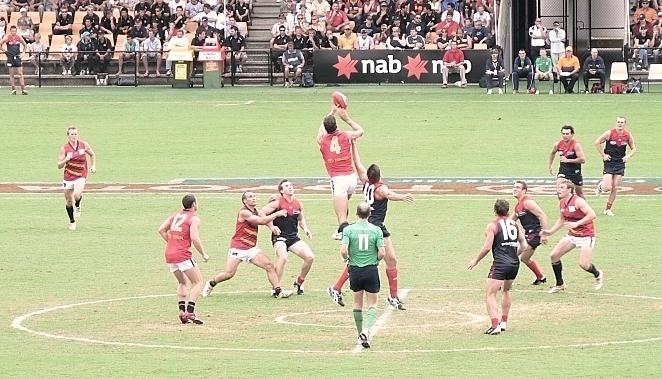

Australian rules football can look chaotic to newcomers, but once the structure is understood, it becomes easier to follow. From the number of players on the ground to the roles they play, AFL is a sport built on balance, movement, and teamwork.
Basic team numbers and match setup
An AFL team has eighteen players on the field at any one time, with four additional players on the bench. This means a total of 22 players are selected per match, although substitutes can rotate on and off throughout the game. The game is played on a large oval, which allows players to spread out and cover significant ground. Due to the size of the field, endurance and positioning are just as crucial as skill.
How AFL positions are grouped
Positions in AFL are generally grouped into three main areas: defence, midfield, and forward line. While players often rotate and adapt during a match, each role has specific responsibilities that enable the team to function as a cohesive unit.
Defensive roles explained
Back pockets and full back
The backline is responsible for stopping the opposition from scoring. Back pockets usually defend smaller, quicker forwards and need strong one-on-one skills. The full back is the key defender and typically lines up against the opposition’s leading goal kicker. Strength, positioning, and marking ability are essential in this role.
Half back line and centre half back
Half-back flankers play slightly higher up the ground and often help launch attacks once possession is won. The centre half-back is one of the most crucial defensive roles, typically matching up against the opposition’s best forward and providing support to teammates under pressure.
Midfield and ruck roles
Midfielders
Midfielders are involved in almost every contest. Their job is to win the ball, distribute it cleanly, and support both defence and attack. They cover more distance than any other players on the ground and require high fitness, awareness, and decision-making.
Wingers
Wingers play on the outside of the contest and provide width across the ground. Their role is to be available as an option when the ball is moved out of congestion and to help transition play from defence to attack. A winger needs strong endurance, as they are constantly running up and down the ground.
They also need to be disciplined, as they are responsible for stopping their direct opponent from doing damage on the outside. When used well, wingers can open up the game and give their team space to move the ball more freely.
Ruck
The ruck is usually the tallest player on the team and plays a crucial role at stoppages. Their main job is to contest throw-ins, trying to tap the ball to their midfielders. Timing, leap, and body positioning all matter here.
Forward line positions
Half forward line
Half forwards sit between the midfield and the deeper forwards and play a flexible role. They are expected to apply pressure when the opposition has the ball and then quickly switch into attack once possession is won.
Centre half forward
The centre half forward is usually a key target inside the forward line and often one of the most dangerous players on the ground. They need to be strong in the air, smart with their movement, and able to bring the ball to ground if they cannot take a mark.
This role is not just about kicking goals. A good centre half forward creates space for teammates, draws defenders away from goal, and applies pressure when the ball hits the deck. When they are playing well, the entire forward line benefits.
Full forward and forward pockets
The full forward plays closest to the goal and is primarily responsible for scoring. They are usually tall, strong, and good contested markers. This player spends a lot of time battling defenders and needs to stay mentally switched on, as opportunities can come quickly.
Forward pockets are typically smaller, quicker players who thrive at ground level. They are there to snap up loose balls, apply pressure, and capitalise on mistakes.
Betting on the AFL
If you ever plan on betting on the AFL, then finding a reliable bookie to weigh up the odds on and do some research is essential. We recommend checking the Ladbrokes AFL odds. They have a wide range of odds for you to check alongside other relevant information that you can use to place winning bets.
Final thoughts
An AFL team fields eighteen players, each with a defined role that contributes to the overall structure of the game. While positions provide a framework, modern AFL relies on flexibility, fitness, and teamwork. Understanding how each role fits together makes watching the game far more enjoyable and highlights just how demanding Australian rules football really is.