

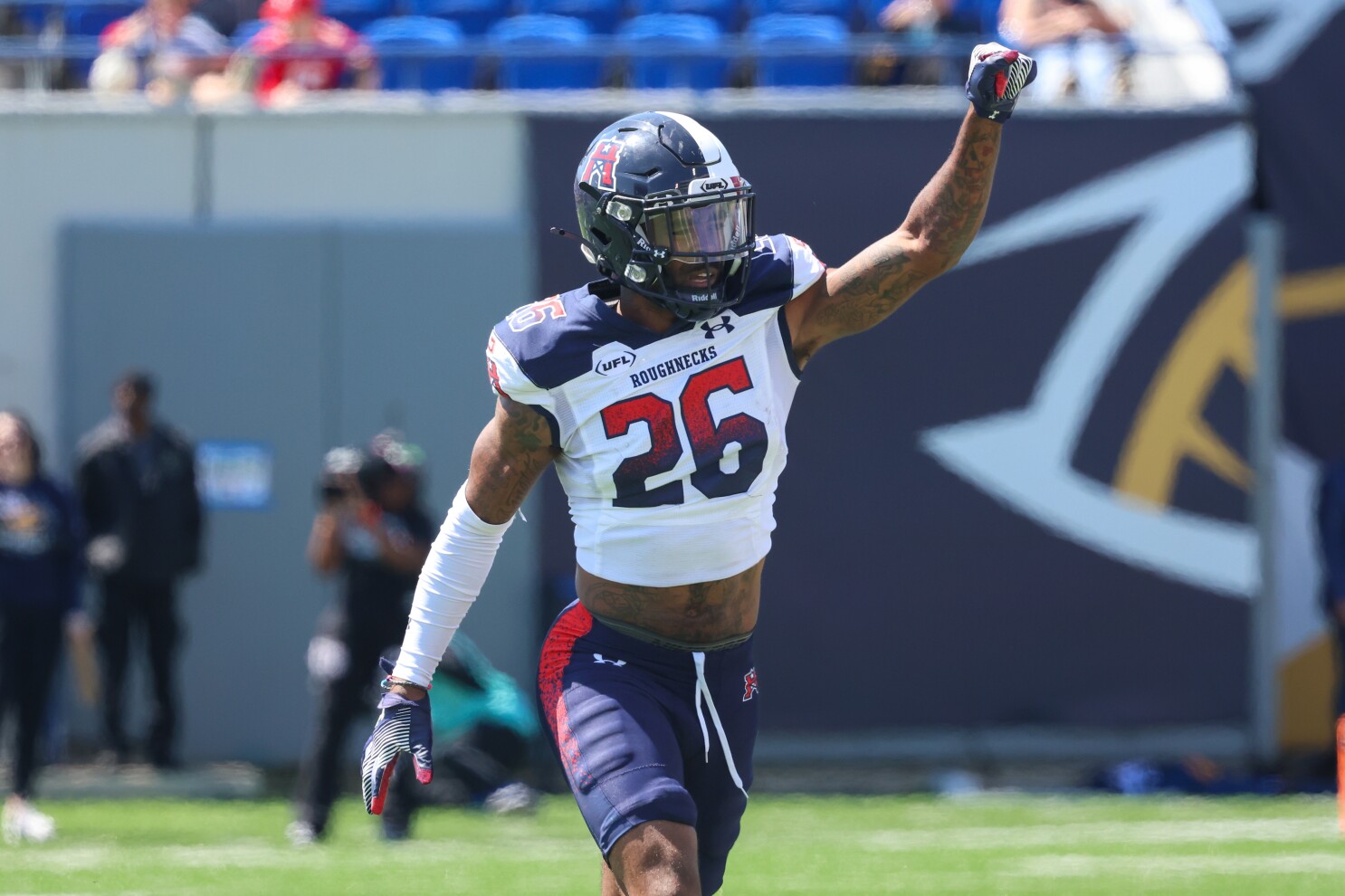

Former United Football League standouts are no longer just training-camp trivia. In the 2025 NFL season, a real handful of UFL alumni have grabbed jobs that matter every Sunday—some of them in roles that directly swing games. This article tracks that UFL-to-NFL pipeline with a starting-role lens: who has climbed from spring-ball dominance to being listed with the first unit, how they’re holding those jobs, and why checking weekly NFL starting lineups is the cleanest way to verify their status in real time.
The Value of the Pipeline
The UFL has become football’s most practical second runway. It gives high-end fringe talent a place to play meaningful snaps under pro coaching, in schemes close enough to NFL structures that the tape transfers cleanly. For NFL teams, that’s a low-risk scouting pool. For fans, it creates a new kind of storyline: guys you watched in the spring now shaping games in the fall. In 2025, the pipeline has moved past “made the roster” victory laps. We’re seeing UFL alumni win roles that decide outcomes—kicking points, flipping field position, and collapsing pockets. Every time a former UFL player holds a first-unit job, the league’s credibility rises, and the NFL’s talent ecosystem gets deeper.
Positional Success Story #1 – Brandon Aubrey, K, Dallas Cowboys
Kickers live in the harshest neighborhood in football, where a short slump can erase a career. Brandon Aubrey’s path is the opposite: a pipeline jump that looks permanent. In the UFL with the Birmingham Stallions in 2022 and 2023, he drilled field goals at 85% accuracy and helped deliver back-to-back championships, building a profile of reliability plus big-leg upside. Dallas didn’t sign him as a flyer; they signed him because his spring tape looked ready for Sundays. Through five weeks of the 2025 NFL season, Aubrey has been 8-for-8 on field goals and 93.8% on extra points, giving the Cowboys weekly certainty at a spot where most teams hold their breath.
Aubrey’s “Starter Proof” Moments
Starter status isn’t secured by vibes—it’s secured by moments that change how a coaching staff calls a game. Aubrey detonated that argument early in 2025. He hit a 64-yard field goal in Week 2 vs. the Giants, tying an NFL record, then somehow went longer with a 65-yarder a week later. That kind of range doesn’t just add points; it rewrites decision-making. For Dallas, “cross midfield” now feels like “enter scoring territory.” When a former UFL player becomes a built-in strategic upgrade, his job stops being a storyline and starts being a fixture.
Positional Success Story #2 – KaVontae Turpin, WR/Returner, Dallas Cowboys
KaVontae Turpin is the modern spring-football blueprint: devastate a league, then carry that explosive identity into a specialized NFL role that steadily grows. In 2022 with the New Jersey Generals, Turpin logged 1,000+ all-purpose yards and was voted for the 2022 league MVP, basically turning every touch into a house-call threat. Dallas saw more than a returner—they saw a weapon. In 2025, Turpin is a weekly first-unit player on special teams and a designed-touch option on offense. Through five weeks he’s produced 11 receptions for 159 yards and a touchdown, while staying one of the league’s most dangerous return men.
Turpin’s Field-Flipping Production
Turpin’s starter value lives in the hidden yards that tilt games before an offense even huddles. In Week 4 against Green Bay, he erupted for 175 kickoff-return yards, turning ordinary possessions into short fields. By five weeks in, he had already crossed over 500 return yards, forcing opponents to kick differently and cover differently. That pressure doesn’t show up as a single stat column, but coaches feel it all week. Return explosiveness like that keeps a player on the first unit even if his offensive snaps fluctuate, because the advantage is too big to shelve.
Positional Success Story #3 – Jalen Redmond, EDGE, Minnesota Vikings
Pass rush is where many spring-league stars get exposed. Jalen Redmond has done the reverse. His 2024 UFL season was an NFL tryout with teeth: 4.5 sacks and 18 tackles for loss, showing burst, violence, and a finisher’s mindset. Minnesota needed edge energy in Brian Flores’ defense, and Redmond didn’t wait for permission. In 2025 he’s hovering around a 40% snap share while producing starter-level disruption: 13 tackles, three sacks, and a forced fumble in the opening stretch. His Week 3 grading spike to 89.8 put him among the best edge defenders in football that week. Rotational on paper, core contributor on the field.
Redmond’s Ripple Effect on Minnesota’s Season
Minnesota’s 2025 team identity leans defense-first. With a young offense led by sophomore starter J.J. McCarthy and a projected 9-8 type of ceiling, Flores’ unit needs to win field position and tempo battles. Redmond’s edge pressure has become a key lever. His speed off the corner compresses pockets early, lets Flores blitz creatively without selling out the back end, and helps chase a unit target of around 40 sacks. When a pipeline player isn’t just surviving snaps but shaping a defense’s weekly plan, that’s not a cameo—it’s a legitimate starting-caliber impact.
Emerging Starter Watch – Harrison Mevis, K, Los Angeles Rams
Not every pipeline success starts in September. Some kick the door down midseason. Harrison Mevis, only 23 years old, forced his way into a starting job for the Rams after a dominant spring. With the Birmingham Stallions, he went 20 of 21 on field goals in the UFL, showing repeatable mechanics and calm in pressure kicks. The Rams made the switch after Joshua Karty’s struggles and then fully committed by waiving Karty. That decision matters: teams don’t hand the kicker job to a former spring-leaguer unless they trust him to decide close games. Mevis didn’t just earn a look—he earned the job.
The Roster Barrier and Verification
The leap from UFL stardom to NFL relevance is brutal. Dozens sign futures deals; a smaller group makes rosters; an even smaller group starts games. That’s why tracking who truly “made it” has to be evidence-based. Camp talk, social clips, and contract headlines are noise if a player isn’t running with the first unit on game day. The simplest validator is checking updated NFL starting lineups each week. If a former UFL player keeps showing up with the ones, you’re watching a real pipeline hit—not a temporary story.
Data vs. Hype: Sustaining the Role
Pipeline players stay in jobs the same way veterans do by stacking production that coaches can’t ignore. Aubrey’s case is clean math—8-for-8 field goals, 93.8% extra points, and back-to-back monster kicks at 64 and 65 yards. Turpin holds value in two lanes, and both are loud—11 catches, 159 yards, one touchdown, plus return explosiveness already past 500 yards. Redmond’s staying power is in efficiency—40% snaps with impact stats (13 tackles, three sacks, a forced fumble) and top-tier weekly grading (89.8 in Week 3). These aren’t hype bubbles; they’re role-defining numbers.
Implications for the UFL Brand
Every former UFL player who locks down an NFL starting role upgrades the league’s perception in ways no slogan can. Aubrey has turned Dallas’ midfield into scoring range while tying and then topping record-level distance kicks. Turpin bends special-teams strategy just by existing on the return unit. Redmond is helping anchor a defensive identity and pushing a sack-heavy vision into reality. Mevis is a 23-year-old spring-league kicker now trusted to carry an NFL job. That cluster of outcomes sends a clear message to future prospects and scouts alike: UFL snaps are meaningful for evaluation of currency, and the pipeline is alive, measurable, and visible every single week.