

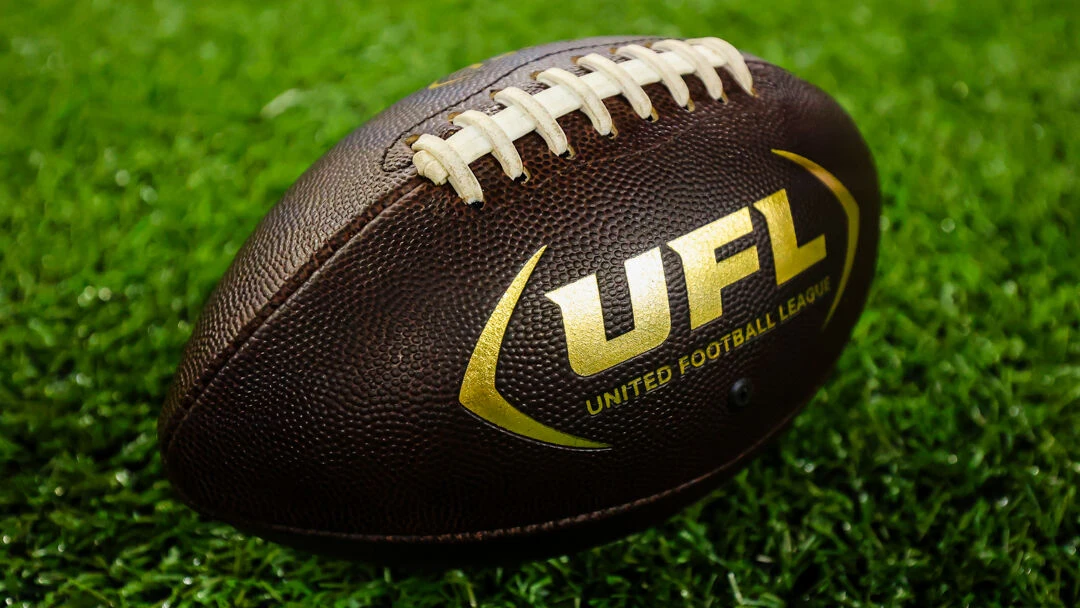

When talking about the NFL, the United Football League (UFL) doesn’t always receive a ton of attention. Sure, they earn honorable mentions during offseason pieces, and when talking about training camp additions. For the most part, though, many fans and even pundits alike view the National Football League as its own separate entity.
In the most fundamental terms, this is true. The NFL does not have a minor league. Its scarcity of product, in the form of a 17-game regular season, makes it somewhat unnecessary. There is also this belief that the NFL is already so ubiquitous that it doesn’t need an avenue through which to explore major wholesale or in-season changes.
It is somewhat difficult to argue with that slant. No North American sports league generates more interest than the NFL. From the ratings of a random Week 9 Monday night game between two non-flagship franchises to the sheer breadth of NFL betting lines on every game, the evidence of its domination is everywhere.
Still, the UFL is something of an x-factor for the NFL—for a variety of reasons to boot. The list, in fact, can get pretty long. But let’s roll through some of the biggest reasons why.
The NFL Uses the UFL as a Developmental League
In some ways, the UFL is to the NFL what the G-League is to the NBA. No, UFL teams do not have specific affiliations to one NFL franchise. Where each squad in the National Basketball Association has its own G-league team, UFL organizations operate on an independent basis.
And yet, the NFL still culls talent from those rosters. This is especially true entering the 2025 NFL season,
See, after debuting in 2023, the UFL is beginning to gain real traction. Multiple news outlets have reported they experienced a sizable uptick in television ratings last season. This, in turn, has led to growing fanbases.
More importantly, it is the catalyst driving more exposure to UFL players themselves. NFL teams are taking longer, harder looks at the UFL’s talent when filling out offseason and training camp roster spots. According to Fox Sports, in fact, NFL teams have signed 38 players from the UFLsince June 18. That is a pretty big number when you consider the UFL only has eight teams.
What’s more, many believe this rate of conversions will only increase. That makes sense. Every squad in the NFL has 53 spots to fill. That means there are plenty of opportunities to take fliers closer towards the bottom of the depth chart.
Indeed, this can often take the form of non-guaranteed training camp contracts. But because of the way UFL games are played, NFL teams can find it easier to make midseason integrations following an injury or major roster decision that creates an opening.
The UFL Can be Used to Test Out Rules for the NFL
The UFL is already testing out rules the NFL wants to monitor—and potentially adopt. As ESPN’s Kevin Seifert wrote ahead of the 2025 UFL season:
“When the NFL decided to revamp its kickoff structure last year, it didn’t start from scratch. The league instead leaned into a model from the now-defunct XFL, one that had been developed and tested during a five-year period from 2018 to ’23. NFL rule-makers imposed a few tweaks and managed to raise the return rate while lowering the injury rates in 2024, and owners are soon expected to renew those plans for another season.
“The kickoff story is one of many reasons to monitor spring football, where pro-level innovation continues to percolate. The United Football League, the product of a merger between the XFL and USFL, will open its second season this weekend with a series of on-field and technological advancements that could find their way into NFL discussions in the coming years. ‘We have this unique ability to introduce innovation that has the ability to impact the game of football broadly,’ said Scott Harniman, the UFL’s senior vice president of technology and leader of its FAST (Football Advancement through Sports Technology) program. ‘It’s not just for the UFL, not for spring football. We have to introduce these things that can impact and advance the game of football.’”
Now, the NFL will not implement everything the UFL tests out or uses. But even now, there are a handful of UFL rules that many are monitoring through an NFL lens.
This past season, the one that received the most traction among fans and analysts was the use of “super challenges.” The UFL already allowed its coaches the ability to challenge one officiating call no matter what it was—including penalties and no-calls. In 2025, they adjusted the rule so that coaches would receive a second super challenge if their first one was successful.
This is something you could easily envision the NFL implementing one day. Fans, analysts and even team officials have complained about the length of time challenges already take, so that might be something to consider. But as more and more sports expand their challenge rules—most notably tennis and basketball—it stands to reason the NFL will closely watch the super-challenge movement in the UFL.
UFL Technology Can Also Make Its Way to the NFL
To be honest, this one probably isn’t talked about enough. Keeping in theme with their model of game “innovation,” the UFL liberally tests out various types of technologies that can impact the executive and flow of each tilt.
Not all of these experiments are home runs. But tools such as the 4K True Line technology have proven to be hits. And this, specifically, is something you could easily envision the NFL trying out.
More recently, the UFL has tried out different types of tech aimed at improving the scope and scale of in-game communication. Parabolic mics, helmet cams and drones are now all part of the process. The UFL believes they give the fans a whole new insight into live-game action, both from audio and visual perspectives.
They’re probably right. Whether the NFL looks at this, though, is debatable. All of the major North American sports leagues tend to curate live-game action, particularly inside sideline and on-field huddles, like they’re state secrets.
Regardless, this underscores how useful the UFL is to the NFL—not only as a talent incubator, but as a league that will shape rule changes and in-game experiences in the future.